The Supply Side

Options for landlords who want stability without extraction

Synthetic Equity does not only help renters. It gives landlords, homeowners and portfolio owners a set of structured exits, partial exits and operating partnerships. The point is not to punish supply. The point is to convert fragile, adversarial landlording into professionally managed, member-aligned housing capacity.

See the supply-side frame
Synthetic Equity app

The Supply-Side Frame

The landlord problem is not greed versus virtue. It is bad architecture.

The broken binary

Landlords are offered two bad choices: operate harder or exit badly

Conventional policy treats landlords as either villains to be squeezed or small businesses expected to absorb every regulatory, interest-rate, compliance and tenant-risk shock. That produces the predictable result: defensive behaviour, underinvestment, higher rents, lower trust and eventual distressed exits.

Synthetic Equity creates a third path. A property owner can keep ownership, sell gradually, lease capacity, remain in the home, or convert into a member of the system. The asset is no longer forced through the crude binary of private landlord versus outright sale.

What the structure changes

  • Voids become portfolio-managed utilisation risk
  • Tenant churn becomes member continuity
  • Ad hoc compliance becomes professional administration
  • Property isolation becomes cluster participation
  • Exit pressure becomes optionality

The landlord is not asked to become a social worker, mortgage trader, compliance officer and repairs desk simultaneously. The trust absorbs the system role and prices it explicitly.

The Four Landlord Options

Different owners need different exits. SER2O supplies a menu rather than a trapdoor.

Master Lease

Keep ownership, outsource the operating burden

The owner grants the Synthetic Equity vehicle a master lease over the property for a defined term. The trust manages occupants, payments, documentation, member conduct and day-to-day administration underneath the head agreement.

  • Contracted income over the term
  • Reduced void, churn and arrears exposure
  • Owner retains long-term capital upside
  • Trust handles member selection and operating rules

Sale and Leaseback

Release capital without dumping the asset

The property is sold into the Synthetic Equity structure or to an aligned investor, with an optional ongoing role for the former owner as local manager, service provider, minority participant or cluster partner.

  • Clean sale to a professional counterparty
  • Possible ongoing fee income without leverage risk
  • Existing occupants can migrate into clearer agreements
  • Avoids forced-market timing where possible

Lease and Leaseback

Stay in the house, unlock spare capacity

For larger homes, the owner leases the full property to the trust and leases back the rooms or private area they wish to keep. The remaining capacity is offered to vetted Synthetic Equity members under house rules, nomination criteria and replacement mechanics.

  • Turn unused rooms into structured income
  • Retain occupation of the home
  • Member vetting and behaviour standards
  • Useful for staged downsizing or later-life transitions

Become a Synthetic Equity Member

Convert illiquid ownership into flexible participation

Some owners may choose to stop being landlords entirely. They sell or lease the asset into the structure, release capital, and remain as members whose monthly payments build a diversified Synthetic Equity position rather than leaving them exposed to one ageing property.

  • Remain in familiar surroundings if suitable
  • Convert concentrated property wealth into liquidity
  • Join the wider housing network
  • Gain future ability to move, downsize or relocate

How the Supply Side Works

The trust turns individual property problems into portfolio-managed housing capacity.

1. Property intake

Each property is assessed for legal title, building condition, location, association or freehold issues, energy performance, likely member demand, refurbishment cost and cluster fit.

2. Option selection

The owner chooses a supply-side route: master lease, sale, sale-and-leaseback, lease-and-leaseback, joint venture, staged sale, or member conversion. The structure follows the owner's constraint.

3. Member deployment

The property is placed into the member network, where occupancy is matched to income, location, size, duration and eligibility. The household becomes part of a system rather than a one-off tenancy.

The central conversion

From landlord-versus-tenant to asset-owner plus member network

In the ordinary market the landlord and tenant face one another across a narrow contract. Each side tries to protect itself from the other. SER2O changes the geometry: the owner supplies capacity to a professionally managed housing network, and the resident joins as a member whose incentives are aligned with care, continuity and future optionality.

The underwriting discipline

The trust must be selective because the cluster is the product

Not every property belongs in the system. A cheap asset in the wrong building, with the wrong association, the wrong maintenance backlog or the wrong micro-location is not cheap. It is operational debt wearing a front door. Supply-side discipline protects members, investors and owners alike.

Risk Transfer, Not Risk Denial

SER2O does not pretend housing risk disappears. It moves risk to the layer best able to manage it.

For small landlords

De-risk income
less operating volatility

Useful where the owner wants predictable income but no longer wants tenant-by-tenant exposure.

  • Reduced void risk
  • Reduced arrears management
  • Lower administrative load
  • Clearer compliance pathway

For portfolio owners

Cluster participation
better utilisation

Useful where a portfolio can be made more valuable by joining a member network rather than being let unit by unit.

  • Network demand visibility
  • Professional operating standards
  • Potential refurbishment pathway
  • Portfolio-level valuation logic

For older owners

Equity release without exile
step down, not out

Useful where the owner is asset-rich, cash-constrained and not ready to leave their home or community.

  • Stay-in-place options
  • Room-capacity monetisation
  • Future downsizing within network
  • Reduced single-asset concentration

Guardrails

The structure only works if both owners and members know what is being priced.

What SER2O should not be

Not a dumping ground for bad assets

Synthetic Equity is not a rescue vehicle for properties that are unsafe, legally defective, unfinanceable, impossible to insure, trapped in dysfunctional buildings, or likely to impose uncontrolled costs on future members. If the owner is trying to export hidden risk into the trust, the answer should be no.

What it can be

A clean route for useful housing capacity

The right property is one that can be made stable, decent, financeable and useful to a member cohort. That may mean a single flat near a hospital, a tired family house with unused rooms, a small BTL portfolio, or a block that needs professionalised management rather than endless piecemeal letting.

Minimum due diligence

  • Title, planning, licensing, leasehold or apartment-association review
  • Condition survey, safety review and energy-performance pathway
  • Local demand, employment nodes, transport access and cluster relevance
  • Transparent valuation and renewal mechanism
  • Clear allocation of maintenance, capex, insurance and compliance responsibilities

The Owner's Real Question

Not “sell or keep letting?” but “which supply-side position has the best risk-adjusted terms?”

The wrong question

Should I stay a landlord or sell?

That binary loses information. A landlord may want income but not operations, upside but not leverage, liquidity but not exile from the property, or social usefulness without becoming an unpaid housing authority. A binary market cannot price those preferences; it can only force them into crude transactions.

The better question

What is the right position in the housing stack?

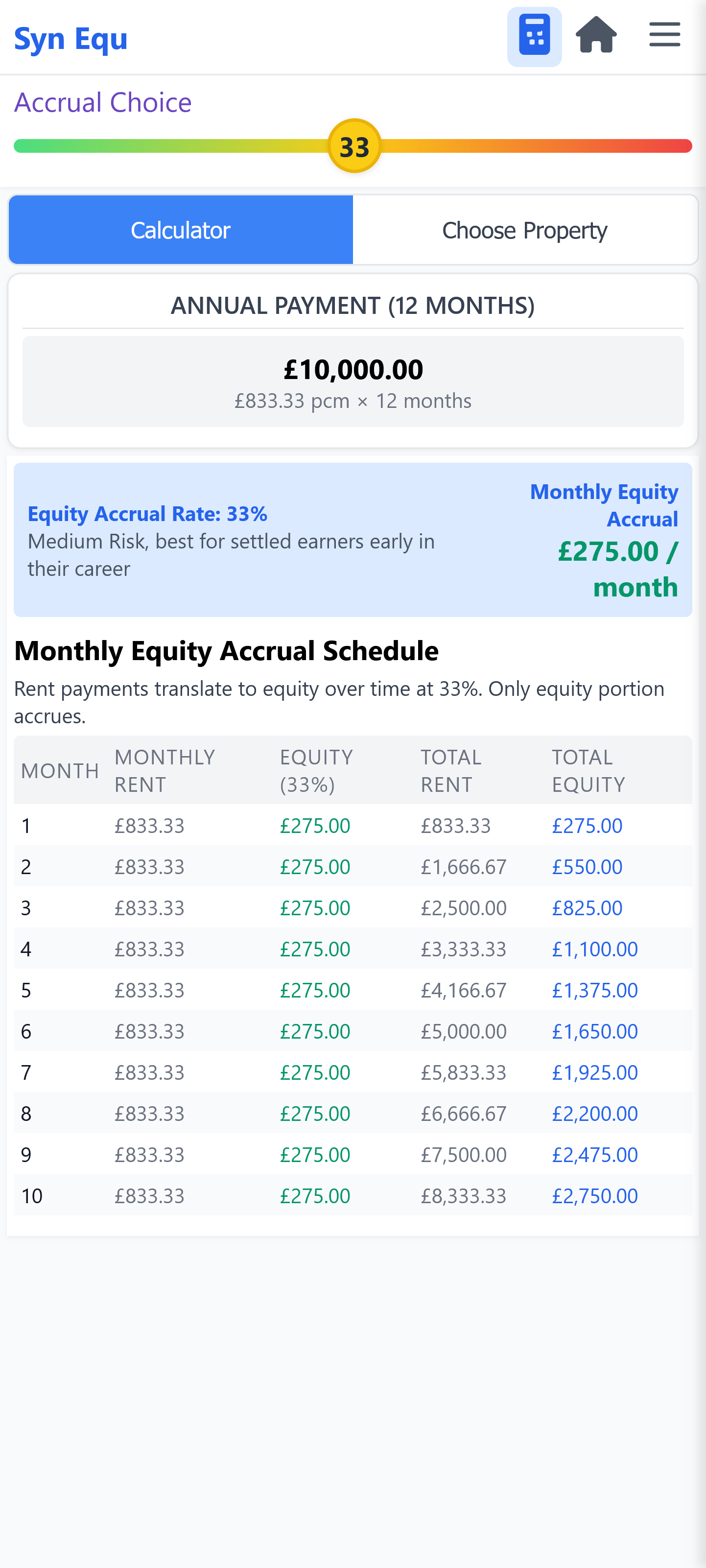
SER2O lets the owner choose a position: lessor, seller, member, local partner, manager, minority investor, or capacity provider. Once the role is explicit, risk can be priced and responsibility can be assigned. That is the supply-side equivalent of turning rent into synthetic equity on the demand side.

Do you want to know more?

Discuss landlord options as a landlord, portfolio owner, housing investor or local partner. The supply side is where Synthetic Equity turns stranded property into stable, member-aligned housing capacity.

Discuss landlord options